
Key Takeaways
-
Dental coverage should be reviewed whenever employment, retirement, military status, residence, or family needs change.
-
A low premium may not yield the lowest annual cost if deductibles, coinsurance, provider access, or annual limits are less favorable.
-
Compare each plan with the care you realistically expect to need, including routine visits and possible restorative work.
-
Eligibility and enrollment rules are different for federal employees, annuitants, TRICARE-eligible retirees, Veterans, and dependents.
-
Read the current plan brochure and verify enrollment timing before making a final selection.
Why Dental Coverage Deserves A Fresh Review
Dental needs rarely stay the same from year to year. A new federal position, retirement, a military separation, a move, marriage, divorce, or the arrival of a child can all change the providers, services, and monthly budget that matter most. For an overview of federal dental plan options and provider access, learn more before comparing the details that apply to your own situation.
A plan that worked well when you needed only cleanings may be less suitable if you now expect fillings, crowns, periodontal treatment, dentures, or orthodontic care for a child. Reviewing coverage before treatment is scheduled gives you time to confirm network participation, estimate your share of costs, and avoid choosing based only on the premium.
Start With Eligibility And Life Stage
Your first task is to identify which coverage category applies to you. Federal civilian employees who are eligible for FEHB or PSHB may be eligible for FEDVIP even if they are not enrolled in those health programs. Certain federal annuitants, retired uniformed service members, eligible National Guard and Reserve retirees, and qualifying family members may also have access to FEDVIP. The current FEDVIP eligibility rules explain the categories and dependent requirements in more detail.
Before you begin comparing plans, gather the information that will help you make an accurate choice:
-
Your employment, retirement, or military status.
-
Your current dental plan name, enrollment type, and coverage end date, if applicable.
-
Names and ages of family members who may need coverage.
-
Your preferred dentist and any specialists you see regularly.
-
A list of expected treatments during the next 12 months.
Compare The Five Costs That Shape A Dental Plan
The premium is important, but it is only one part of the cost. A useful comparison includes all five of these items:
-
Premium: The amount paid each month or pay period to keep coverage active.
-
Deductible: The amount you may pay before the plan begins to share the cost of certain services.
-
Coinsurance: Your percentage of the allowed charge for a covered service.
-
Copayment: A set amount charged for a particular visit or service when the plan uses copays.
-
Annual maximum: The most a plan may pay toward covered dental services during a benefit year.
Create a simple yearly estimate for each option. Add the annual premium, the likely cost of two preventive visits, expected fillings or gum treatment, and any major work already recommended. This approach makes it easier to see whether a lower premium could be outweighed by higher out-of-pocket costs later.
Check The Provider Network Before Enrolling
Provider access can be as important as benefits. Search for your current dentist in the plan directory, then call the office to confirm it accepts the exact plan option you are considering. A dental practice may participate with one network from a carrier but not another option offered by that carrier.
Also, check nearby endodontists, oral surgeons, periodontists, pediatric dentists, and orthodontists if your household may need their services. This is especially important after relocating. A retiree who wants to remain with a trusted local dentist may reasonably prefer a higher premium. At the same time,e an employee with no established provider may prioritize lower recurring costs and a broad nearby network.
Review Preventive, Basic, And Major Services
Plan brochures are easier to compare when services are grouped by the type of care involved:
-
Preventive care: Exams, cleanings, fluoride treatments, and routine X-rays.
-
Basic care: Fillings, simple extractions, and some periodontal services.
-
Major care: Crowns, bridges, dentures, oral surgery, and other more complex treatments.
For each category, check whether the service is covered, how frequently it is allowed, whether preauthorization is needed, and what percentage or copay applies. Pay special attention to replacement rules for crowns, bridges, dentures, and similar appliances. Those limits can matter when a restoration was completed under an earlier plan.
Look Closely At Orthodontic And Family Needs
Families should evaluate orthodontic benefits separately from routine dental coverage. Check whether orthodontia is included, whether age restrictions apply, whether there is a lifetime maximum, and how treatment already in progress is handled. A household expecting braces, crowns, or several restorative visits may find that a plan with a higher premium offers better overall value.
Review the enrollment type as well. Confirm whether Self Only, Self Plus One, or Self and Family coverage applies to your household, and ensure every dependent meets the program’s requirements. Do not assume that family eligibility rules for dental coverage are identical to the rules of a medical plan.
Know How Enrollment Windows Work
Enrollment opportunities depend on your status. Eligible employees and retirees can generally enroll or make changes during the annual Federal Benefits Open Season, while new eligibility and qualifying life events may create additional enrollment opportunities. Confirm the applicable deadline, the effective date of coverage, and the process for submitting an enrollment through BENEFEDS before relying on a plan for upcoming treatment.
People leaving active service or entering retirement should not assume dental coverage follows the same rules as medical coverage. Confirm eligibility before the retirement or separation date, review dependent status, and save enrollment confirmations and current plan materials. If costly care is planned, verify the coverage effective date before scheduling it.
Consider Access To Care For Veterans
Veterans should confirm dental eligibility rather than assuming VA health care enrollment includes comprehensive dental benefits. VA dental eligibility depends on factors such as service history, disability status, current treatment needs, and other circumstances. Learn about available dental care benefits to help Veterans determine whether they may qualify for some or all care through VA.
Veterans enrolled in VA health care who do not qualify for all necessary VA dental services may also have access to the VA Dental Insurance Program. Compare any available option with your expected care, preferred providers, and budget before enrolling.
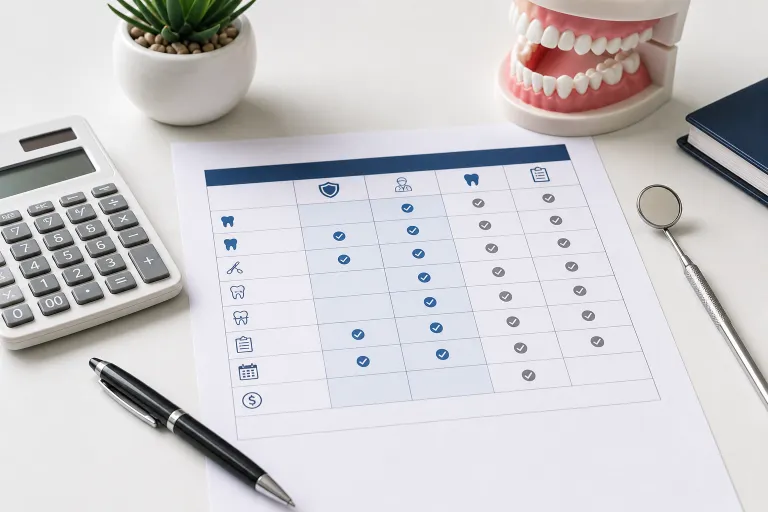
Use A Simple Plan Comparison Worksheet
For each plan you consider, write down the following details in one place:
-
Plan name and option.
-
Monthly or pay-period premium.
-
Deductible and annual maximum.
-
Cost for preventive, basic, and major services.
-
Orthodontic coverage, age limits, and lifetime maximums.
-
Frequency limits and replacement rules.
-
Whether your dentist and nearby specialists are in network.
-
Family coverage requirements and the enrollment deadline.
Common Mistakes To Avoid
-
Choosing solely based on the premium without estimating the total yearly costs.
-
Assuming every office accepts every plan option from a familiar insurer.
-
Overlooking annual maximums or coinsurance for major treatment.
-
Ignoring orthodontic restrictions and dependent eligibility rules.
-
Using an old brochure, provider directory, or rate sheet.
-
Waiting until treatment is urgent before reviewing coverage.
Choose Based On Expected Care, Not Just Price
The strongest dental coverage choice reflects your eligibility, household needs, provider preferences, and likely treatment for the coming year. Confirm the details, compare total expected costs, and keep current plan documents with your enrollment records. A careful review now can make budgeting for dental care easier when you need it.
