
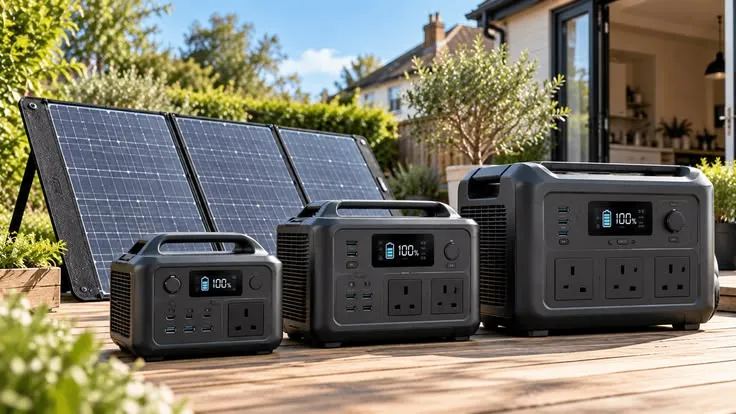
Portable battery systems have become a popular option for people who need electricity during camping trips, temporary outages, or outdoor activities. Unlike fuel-powered generators, these devices store electricity in rechargeable batteries and deliver it through built-in outlets. Some can also recharge using compatible solar panels. Understanding Solar generators and portable power stations helps buyers compare capacity, charging methods, and practical limitations before selecting equipment. Although these systems are convenient for many applications, their suitability depends on the amount of energy stored, the power required by connected appliances, and the availability of suitable charging sources.
What Makes a Solar Generator Different?
The term solar generator generally refers to a portable battery power station used with compatible solar charging equipment. It does not produce electricity by burning fuel or generating mechanical energy.
Instead, the system stores energy received from solar panels, household electricity, or another supported input. An inverter converts stored energy into AC electricity for compatible devices.
Some products include solar panels in a package, while others require separate purchases. Buyers should always check what is included and whether charging accessories match the power station’s specifications.
Understanding Watts and Watt-Hours
One of the most important distinctions is the difference between watts and watt-hours. Watts describe the rate at which an appliance consumes power. Watt-hours describe an amount of energy.
For example, a device drawing 100 watts for two hours uses approximately 200 watt-hours of electrical energy. A power station’s advertised battery capacity indicates its nominal stored energy, not necessarily the exact amount available through its AC outlets.
Inverter losses, battery management, temperature, and operating conditions can reduce usable energy. Runtime estimates should account for these differences.
Match Output Capacity to Your Equipment
Battery capacity alone does not determine which appliances a portable power station can operate. The inverter must also support the connected equipment’s running and starting requirements.
A laptop charger may require relatively little power, while a refrigerator compressor may draw substantially more electricity when starting. A power station with sufficient stored energy could still be unable to start an appliance if its inverter output is inadequate.
Always verify the equipment’s ratings and the power station’s continuous and surge output specifications. Manufacturer compatibility information is especially important for sensitive or critical equipment.
Compare Different Charging Methods
Portable power stations may support several charging options. Understanding them helps determine whether the system will remain useful during an extended trip or outage.
Common methods include:
-
AC charging from a compatible household outlet.
-
Solar charging through supported photovoltaic panels.
-
Vehicle charging using approved adapters.
-
Charging from another compatible power source.
-
Combined charging methods on selected models.
Charging times vary according to the input power, battery state, environmental conditions, and equipment design. Advertised maximum charging speeds should not be assumed achievable in every situation.
Solar Charging Depends on Conditions
Solar panels can extend the usefulness of battery systems when sufficient sunlight is available. However, their output changes with cloud cover, shading, panel angle, temperature, and time of day.
A panel rated at 200 watts will not necessarily deliver 200 watts continuously. Its rating describes performance under standardised test conditions rather than every real-world situation.
Buyers should compare the power station’s supported solar input with the panels they intend to use. Connections must meet the manufacturer’s voltage and current limits to avoid equipment damage.
Advantages of Battery-Based Power
Portable battery systems produce no combustion exhaust at the point of use. This makes them suitable for many indoor applications when operated according to manufacturer instructions.
They may also be quieter than fuel-powered generators and require less engine-related maintenance. Some models offer convenient USB outlets, digital displays, and automatic power management.
However, battery-based systems still have electrical and thermal safety requirements. Users should avoid damaged batteries, inappropriate charging equipment, and operating conditions outside the specified temperature range.
Important Limitations During Long Outages
A battery power station has finite energy storage. Once its charge is depleted, it needs another energy source before it can continue supporting connected equipment.
This can become a challenge during prolonged cloudy weather or outages when household electricity is unavailable. Solar charging may help, but daily energy production is not guaranteed.
High-demand appliances such as electric heaters or large air-conditioning systems can exhaust portable batteries quickly. Energy conservation and careful appliance selection are therefore essential parts of planning.
Choosing a System for Your Lifestyle
Campers may prioritise low weight, portability, and convenient charging. Homeowners may care more about refrigerator runtime, emergency communications, and the ability to recharge during an extended outage.
Compare battery chemistry, warranty conditions, charging options, usable capacity, and output limitations. Also consider whether the system can be expanded with compatible additional batteries.
A well-chosen power station should support a realistic list of equipment rather than every possible electrical appliance.
Conclusion
Battery-based power stations can provide convenient electricity for outdoor activities, temporary disruptions, and selected emergency needs. Their effectiveness depends on usable energy capacity, inverter output, charging availability, and the demands of connected devices. Generator Life provides educational resources explaining solar generators, battery capacity, and portable power decisions. Readers should evaluate specifications carefully and avoid treating advertised capacity or charging speed as guaranteed real-world performance. Understanding these limitations makes it easier to choose a system that supports practical needs without unrealistic expectations.
