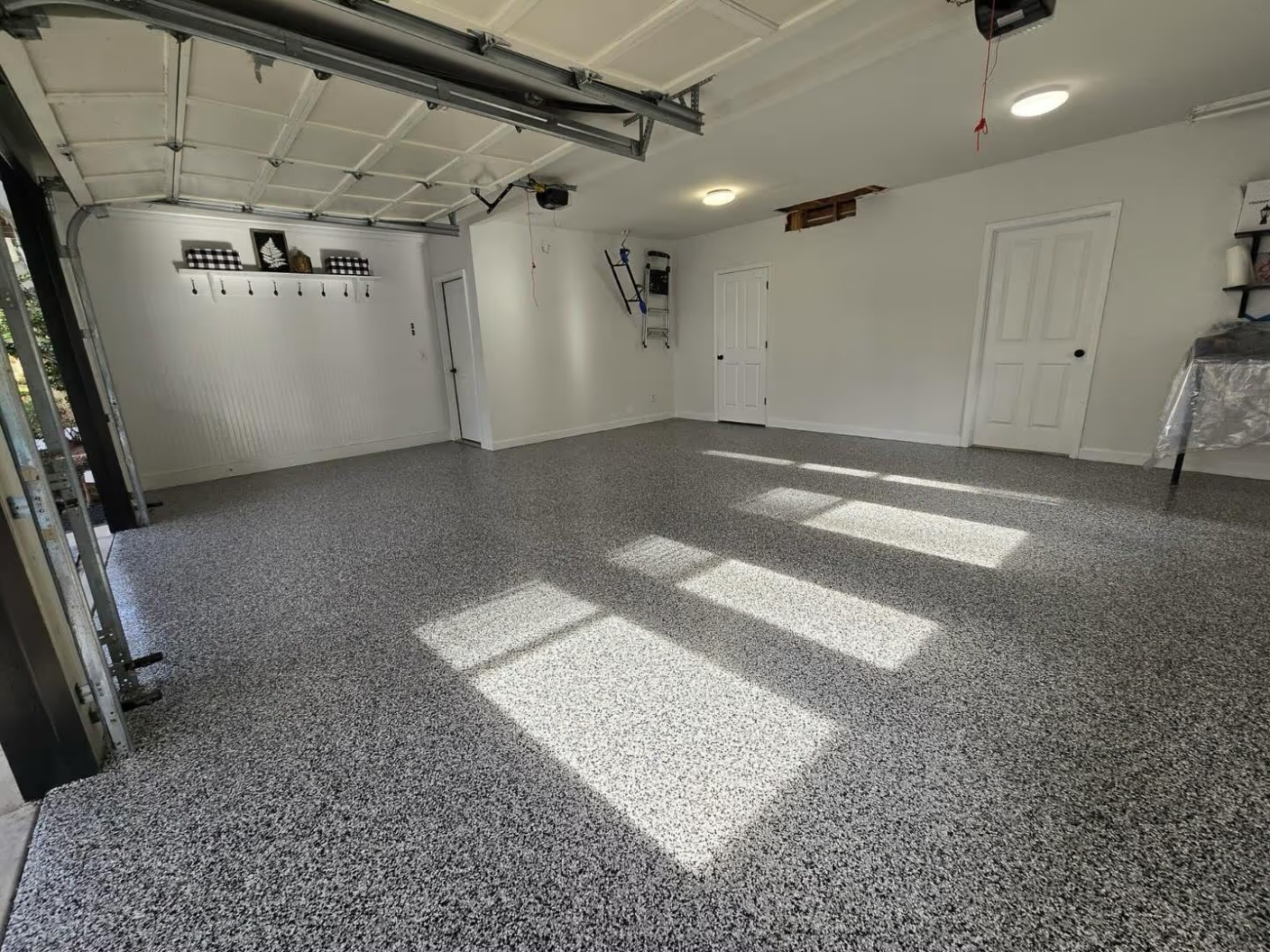
Concrete floors can be finished in several ways, and the right choice depends on what the space needs to handle. A residential garage may prioritize vehicle traffic and easy cleaning, while a commercial interior may care more about appearance, reflectivity and long-term maintenance.
The best flooring decision usually comes from looking at the slab, the amount of traffic and the visual goal together. Choosing by appearance alone can lead to a finish that does not suit the way the area is actually used.
Start With the Existing Concrete
Before selecting a system, the slab should be checked for cracks, stains, old coatings and uneven areas. These conditions can affect both preparation and the final appearance.
A floor that looks acceptable from a distance may still contain weak material or contamination. Identifying those problems early helps create a more reliable base for the next stage.
Think About Daily Use
The floor should be selected around the way the space functions. Vehicles, storage cabinets, rolling equipment and frequent foot traffic all create different demands.
For property owners considering phoenix epoxy flooring, it helps to explain how the area is used every day. That makes it easier to choose a system based on real traffic, cleaning and maintenance needs.
Polished Surfaces Offer a Different Look
Some projects are better suited to working with the existing slab rather than covering it completely. This can create a cleaner and more architectural appearance.
In suitable environments, polished concrete may be considered where a refined finish and the natural character of the slab are part of the design. The final result depends heavily on the quality and consistency of the concrete itself.
Preparation Should Match the Finish
Different systems require different surface conditions. A coating may need a particular profile for adhesion, while polishing follows another mechanical process.
Using the same preparation method for every project is not always appropriate. The work should be matched to the finish that will follow and the condition of the existing slab.
Repairs Should Come First
Cracks, holes and damaged edges should be dealt with before the final finish is installed. Covering them without repair can leave visible or functional problems later.
The repair method should be chosen according to the type of damage and the intended use of the floor. Heavy traffic areas may need a different approach from lightly used spaces.
Consider Maintenance From the Start
Garages can collect road grit, dust and fluid spills, while commercial interiors may need regular cleaning to maintain presentation.
The flooring system should fit the maintenance routine that will actually be followed. A finish that requires more care than expected can become frustrating over time.
Think About Color and Lighting
Lighting can change the way a floor looks throughout the day. Natural light, overhead fixtures and darker enclosed areas all affect color and sheen.
Samples should be viewed in conditions similar to the final space where possible. This is especially important when the floor is intended to become part of the overall design.
Plan for Water and Moisture
Garages may receive rainwater from vehicles, while commercial spaces can face spills or frequent washing. Moisture conditions in the slab itself may also need attention.
These factors should be considered before installation. A flooring system should be selected with both surface exposure and substrate condition in mind.
Allow for Downtime
Flooring work usually requires the area to be cleared. Vehicles, tools, shelving or furniture may need temporary storage elsewhere.
Preparation, application and curing can also affect when the floor can return to normal use. A realistic schedule helps prevent premature traffic on the finished surface.
Think About Future Changes
A garage may later become a workshop or gym, while a commercial room may be redesigned around a new layout.
Choosing a versatile floor can make those changes easier. A system that supports more than one use may offer better long-term value than one selected for a very narrow purpose.
Conclusion
The right concrete floor finish depends on more than appearance. Surface condition, traffic, maintenance, moisture and long-term use all influence the decision.
By matching the flooring system to the way the space actually functions, property owners can create a surface that is easier to maintain and better suited to future needs.